Mice in the Ductwork? What to Do, in the Right Order
Droppings near a register or scratching in the walls? The right order for handling rodents in air ducts: pest control first, repairs next, cleaning last.
Homes near woods and open land, like many around Maple Valley, Black Diamond and Covington, share their surroundings with mice and other small animals. When the weather cools, some of them look for a way inside. Ductwork in a crawl space, garage or attic can become one of the routes they use.
If you've found droppings near a register, heard scratching when the furnace kicks on, or noticed a sour smell from a vent, here's how to deal with it in the right order.
Signs rodents may be using your ducts
Rodents in ductwork rarely announce themselves clearly. Watch for a combination of these:
- Droppings on or under a floor register, or near the furnace
- Shredded insulation, paper or fabric near a vent opening
- Scratching or scurrying sounds in a wall or floor when the system runs
- A stale, musty or ammonia-like odor that's strongest at one or two registers
- Chewed or torn duct insulation in the crawl space or attic
One sign on its own may not mean much. A few together are worth acting on.
Four steps, in the right order
The order matters more than any single step.
Step one: deal with the animals
The EPA lists ducts infested with vermin, such as rodents or insects, as one of the situations where you should consider having them cleaned. But cleaning comes last, not first. If mice can still get in, you'll be paying to clean ducts they'll use again.
Start with a pest control company. They can find how the animals are getting in, remove them, and seal entry points around the foundation, crawl space vents, siding and utility penetrations. Ask them to look specifically at the area around the furnace and any ductwork they can reach.
Step two: be careful with cleanup you do yourself
It's tempting to grab a vacuum and suck up the droppings around a register. Don't. The CDC and the Washington State Department of Health both advise against sweeping or vacuuming dry rodent droppings, urine or nesting material, because it can stir contaminated dust into the air. Their guidance is to air out the area, wear gloves, wet the material with a disinfectant or bleach solution, let it soak, and then wipe it up with paper towels.
Follow that guidance for surfaces you can reach, like the floor around a register. Leave the inside of the duct system for the professional cleaning.
Step three: fix damaged ductwork
Rodents chew. In crawl spaces especially, that can mean torn insulation wrap, holes in flexible duct or loose connections they've pushed through. Before a cleaning, have an HVAC contractor repair or replace damaged sections.
This matters for two reasons. A hole in a return duct can keep pulling in crawl space air after the animals are gone. And according to the EPA, duct insulation that's been contaminated or gets wet can't be effectively cleaned and should be removed and replaced. We'll point out damage we see, but duct repair isn't something we do.
Step four: clean the ducts
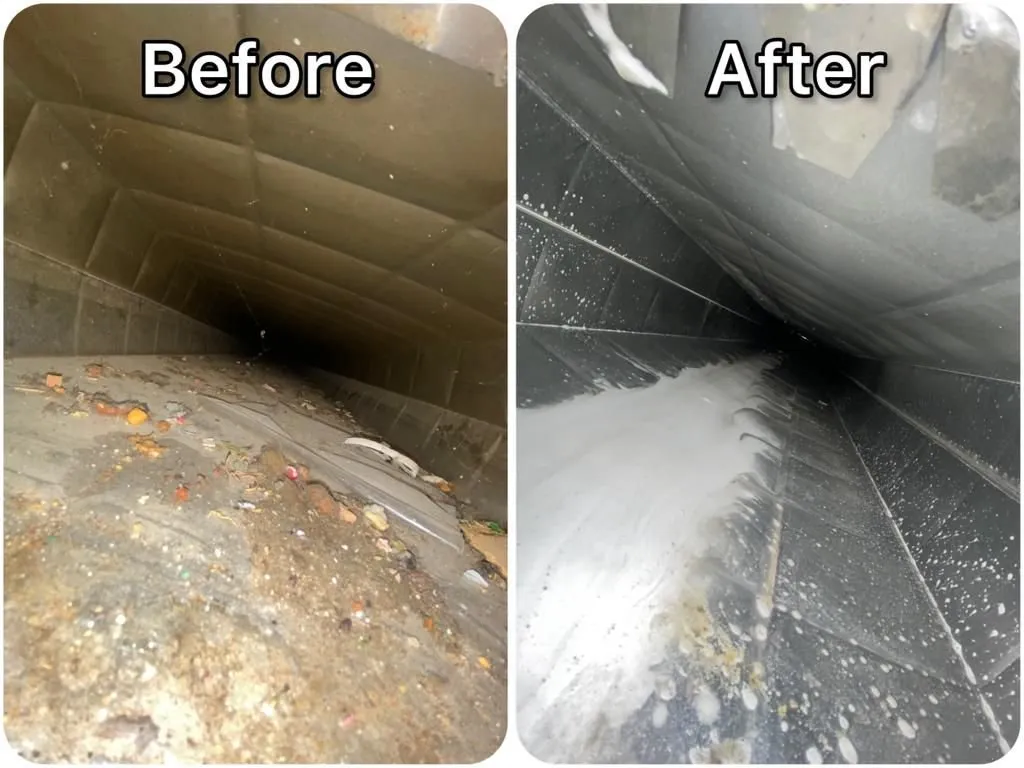
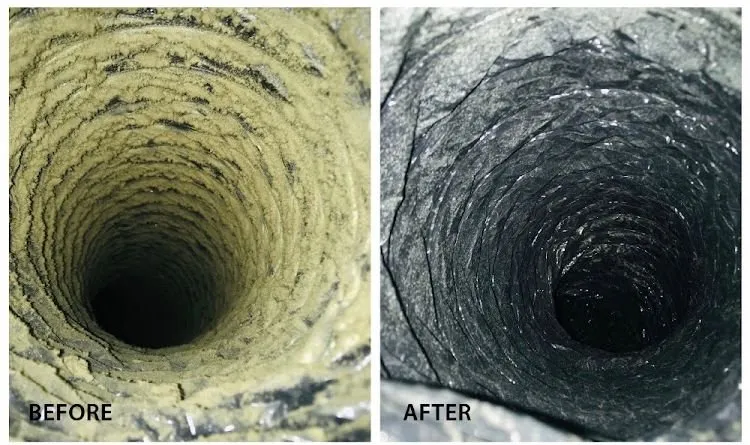
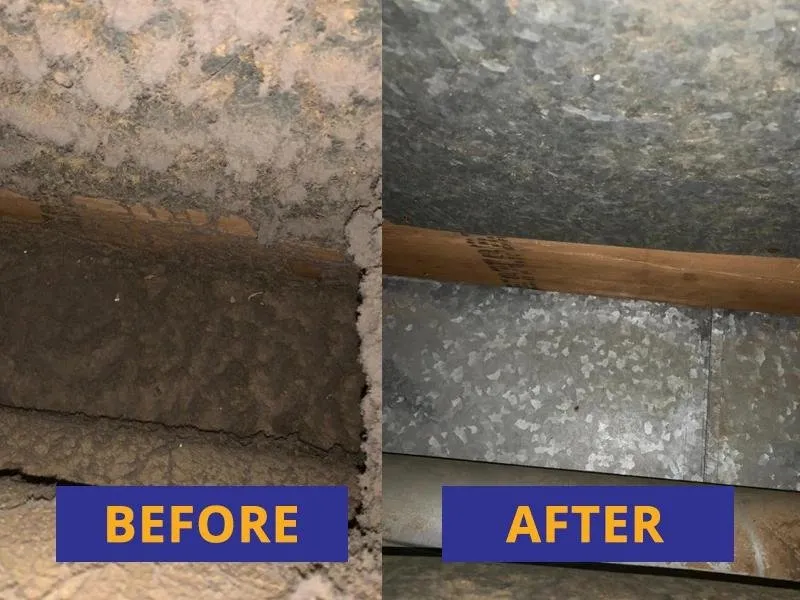
Once the animals are gone and the ductwork is sound, a cleaning removes what they left behind inside the system: nesting debris, droppings and the dust that collected with them.
Our air duct cleaning covers the supply and return ducts and the registers, using rotating brushes to loosen debris from the duct walls and a HEPA-filtered vacuum to pull it out. It's $199 covering up to 10 vents, with $29 added for every vent beyond 10. If the problem was concentrated in a few runs, deep duct cleaning at $59.99 per vent may be the better fit. The full price list is on our pricing page.
Don't forget the dryer vent
Ducts aren't the only opening animals use. The U.S. Fire Administration notes that birds and small animals can nest in dryer vents, which can block airflow. If the outside flap is stuck open, broken or missing, that's an easy way in. Our dryer vent cleaning ($99 for up to 10 feet, then $15 per additional foot) includes an inspection, and we check the outside flap. If it's damaged, have it replaced with a proper vent hood. The USFA advises against putting wire screen over the vent opening, because it catches lint.
A quick checklist
- Call pest control and seal entry points.
- Clean up droppings you can reach using the CDC's wet-cleaning method.
- Have an HVAC contractor repair chewed or disconnected ducts.
- Book the duct cleaning.
- Check the dryer vent flap while you're at it.
If you're past step three and ready for the cleaning, request a free estimate from Moment Air Duct Cleaning Maple Valley. We'll look at the registers and the system and tell you what we see.
Sources
- Should You Have the Air Ducts in Your Home Cleaned?, U.S. EPA, last updated February 19, 2026
- Clothes Dryer Fire Safety, U.S. Fire Administration, accessed October 22, 2026
- Clothes Dryer Fires in Residential Buildings (2008-2010), Topical Fire Report Series Vol. 13, Issue 7, U.S. Fire Administration, August 2012
- How to Clean Up After Rodents, CDC, April 8, 2024
- Safely Cleaning Up After Rodents (poster), Washington State Department of Health, February 2024